MealSelf


How to Gain Weight With a Small Appetite
Eat little and often, pick foods that pack more energy into each bite, and drink some of your calories. A practical plan for people who fill up fast.

To gain weight with a small appetite, stop trying to eat bigger meals and make each bite carry more calories instead. Eat five or six smaller meals and snacks a day, choose calorie-dense foods such as nut butters, olive oil, cheese, whole milk and dried fruit, and drink some of your calories as milk-based smoothies between meals. Aim for about 300 to 500 extra calories a day, eat on a schedule rather than waiting to feel hungry, and add strength training so more of the weight you gain is muscle.
Why is it so hard to gain weight with a small appetite?
Most weight gain advice assumes you can simply eat more. Two things work against you.
First, your stomach has a limit, and many healthy foods are bulky. Vegetables, salads, broth soups, fruit and high-fibre grains contain a lot of water and fibre, so they fill you up long before they deliver many calories. Research from Penn State nutrition scientist Barbara Rolls found that people tend to eat a fairly consistent weight of food, so when the energy density of a meal goes down, calorie intake goes down too. When you are trying to gain, that works in reverse. Raise the calories per bite and you can eat more without eating a bigger volume.
Second, if you wait until you feel hungry, you may not eat often enough. People with a small appetite often get busy, forget a meal, and only notice in the evening that they have barely eaten.
How many extra calories do you need to gain weight?
The NHS suggests that adults who want to gain weight try adding around 300 to 500 extra calories a day. That is the same range we recommend in our guide on how many calories to eat to gain weight, which walks through working out your maintenance calories step by step.
For someone with a small appetite, 300 extra calories is a good place to start. It is roughly one extra snack, or a few small additions to meals you already eat. Weigh yourself a few mornings a week, average the results, and if the weekly average has not moved after two to three weeks, add another 100 to 200 calories.
How do you eat more calories without feeling full?
You do not need all of these habits at once. Pick two or three and build from there.
Eat little and often
Three large meals are hard work when you fill up quickly. Five or six smaller meals and snacks spread across the day are much easier. The National Cancer Institute, which publishes practical advice for people living with poor appetite, suggests eating small meals every 2 to 3 hours, and the NHS also recommends smaller meals more often.
Choose calorie-dense foods
Swap some bulky, low-calorie foods for ones that pack more energy into the same space. Whole milk instead of skim, full-fat yogurt instead of fat-free, granola instead of puffed cereal, and a handful of nuts instead of a rice cake. You are not cutting vegetables or fruit out. You are making sure they are not the only thing on the plate.
Drink some of your calories
Liquids tend to fill you up less than the same calories from solid food. In a small 2000 study in the International Journal of Obesity, adults given an extra 450 calories a day as a drink did not eat less at other times, so their total intake and body weight went up. When the same calories came from a solid snack, they naturally ate less elsewhere and made up for it.
The study used soda, but you do not need sugary drinks. The NHS specifically advises against relying on chocolate, cakes and sugary drinks to gain weight. A smoothie made with whole milk, a banana, two tablespoons of peanut butter and a handful of oats comes to roughly 550 calories, and it brings protein, fibre and vitamins along with the energy.
Do not fill up on drinks right before meals
Water, tea and coffee take up space. The NHS suggests having high-calorie drinks between meals rather than before them, and the National Cancer Institute recommends sipping only small amounts during meals so there is room for food. Drink most of your fluids between meals instead.
Eat on a schedule, not on hunger
If your hunger signals are quiet, do not rely on them. Set times for meals and snacks, or tie them to things you already do, like a snack when you get home from work. The National Cancer Institute suggests setting an alarm as a reminder to eat, eating within an hour of waking up and having a snack before bed.
What are the best high-calorie foods for weight gain?
The best foods for gaining weight are nutritious and calorie-dense. Here are some easy options, with approximate calories based on USDA FoodData Central values:
- Peanut butter or other nut butters. About 190 calories in 2 tablespoons (32 g).
- Olive oil. About 120 calories in 1 tablespoon, with almost no volume.
- Nuts. About 175 calories in a 30 g handful of almonds.
- Cheese. About 120 calories in 30 g of cheddar.
- Whole milk. About 150 calories in a 250 ml glass.
- Avocado. About 160 calories per 100 g, roughly half a large avocado.
- Dried fruit. About 120 calories in 40 g of raisins, compared with about 30 calories for the same weight of fresh grapes.
- Full-fat Greek yogurt, granola, oats, eggs, salmon, rice and whole grain bread to build meals and snacks around.
How can you add calories to meals you already eat?
This is often the easiest win, because you do not have to eat more food, only richer versions of it. For example:
- Drizzle 1 tablespoon of olive oil over your rice or pasta (about 120 calories)
- Grate 30 g of cheddar over eggs, beans or a baked potato (about 120 calories)
- Spread 2 tablespoons of peanut butter on your morning toast (about 190 calories)
Those three small changes add roughly 430 calories a day without making any portion look bigger. Other ideas include cooking oats in milk instead of water, stirring nut butter into porridge, adding avocado to sandwiches, tossing nuts and seeds over salads and yogurt, and using hummus, pesto or tahini as dips and sauces.
What does a day of eating look like with a small appetite?
Here is one example of how mini meals can fit together. Adjust the foods and times to suit your day.
- Breakfast. Two slices of whole grain toast with peanut butter and banana, and a glass of whole milk.
- Mid-morning. Full-fat Greek yogurt with granola and a drizzle of honey.
- Lunch. A rice bowl with salmon or chicken, avocado and a drizzle of olive oil.
- Afternoon. A peanut butter, banana and oat smoothie.
- Dinner. Pasta with a meat or lentil sauce, finished with olive oil and grated cheese.
- Before bed. A handful of trail mix, or cheese and crackers.
None of those meals is large on its own, but together they add up to far more than three normal meals.
Does exercise help you gain weight with a small appetite?
Yes, if it is the right kind. The NHS notes that strength training or yoga can help build muscle and improve appetite. Strength training two or three times a week also gives your body a reason to use the extra calories to build muscle rather than storing most of them as fat.
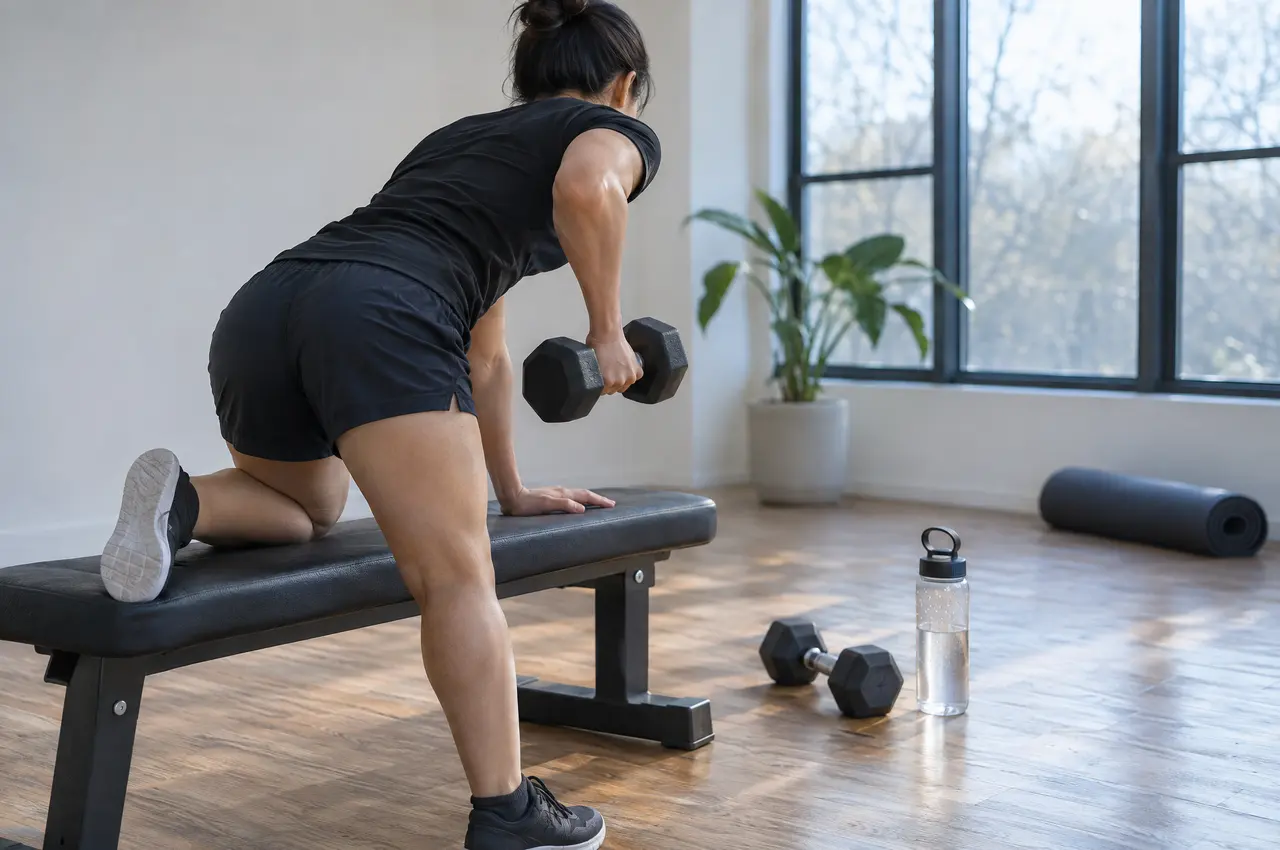
Be careful with a lot of long cardio sessions, though. Every calorie you burn is one more you need to eat, which is hard when your appetite is the bottleneck. Walking and light activity are fine. You just may need to add a snack on days you do a lot more.
How much protein do you need, and can it make you too full?
Protein matters when you are gaining weight, because it supplies the building blocks for muscle. The International Society of Sports Nutrition recommends 1.4 to 2.0 grams per kilogram of body weight a day for most people who exercise. Our guide on how much protein you need a day shows how to turn that into grams for your own weight.
There is a catch for small eaters. A review in the American Journal of Clinical Nutrition notes that protein generally increases satiety, the feeling of fullness, more than carbohydrate or fat does. So spread your protein across the day rather than loading it into one meal, and let fats and carbohydrates such as oils, nut butters, rice, oats and bread supply most of the extra calories.
Who should see a doctor first?
This article is general education for healthy adults, not medical advice. Talk to your doctor or a registered dietitian before trying to gain weight if:
- You have lost weight without trying. MedlinePlus advises contacting a provider if you have lost more than 10 pounds (4.5 kg) or 5% of your normal body weight over 6 to 12 months and do not know why.
- Your appetite has dropped suddenly, or you have other symptoms along with the weight loss. The NHS lists possible causes of unintentional weight loss, including stress, depression, digestive problems, thyroid conditions and the side effects of some medicines.
- You have, or think you may have, an eating disorder, or you use controlling food as a way of coping with feelings.
- You have diabetes, kidney disease, heart disease, a digestive condition or another condition affected by diet.
- You take medication that affects your appetite or weight.
- You are under 18, pregnant or breastfeeding.
- You have been eating very little for a long time. Increasing your intake quickly after a long period of under-eating should be done with medical guidance.
Frequently asked questions
How can I gain weight if I get full quickly?
Eat smaller amounts more often, about every 2 to 3 hours, and make each meal more calorie dense with additions like olive oil, cheese, nut butter and avocado. Drink calorie-rich smoothies between meals, and avoid filling up on water or other drinks just before you eat.
How do I gain weight when I am never hungry?
Eat on a schedule instead of waiting for hunger. Set reminders, plan snacks into your day and keep easy, calorie-dense foods within reach, such as trail mix, yogurt, cheese and crackers. Regular strength training can also help improve your appetite over time.
Are weight gain shakes or smoothies a good idea?
They can be very useful when you have a small appetite, because liquid calories tend to be less filling than solid food. A homemade smoothie with whole milk, fruit, oats and nut butter is a simple option. Have it between meals rather than right before one.
How fast should I try to gain weight?
Slowly. Start with about 300 extra calories a day, track your weekly average weight, and increase in steps of 100 to 200 calories if nothing changes after two to three weeks. A slower gain paired with strength training means more of the weight is likely to be muscle.
Make every meal count with MealSelf
When your appetite is small, every meal has to pull its weight, and guessing portions makes that hard. MealSelf works out your calories with the Mifflin-St Jeor equation and your activity level, then applies a slight gain goal (300 calories above maintenance) or a rapid gain goal (500 above). Protein is set at 0.9 grams per pound of body weight with an upper cap, fat at 27.5% of calories, and carbohydrates fill the rest.
It then builds a week of meals around your body, your goal, the foods you love and the appliances in your kitchen, with a recipe for every meal and a grocery list sorted by aisle. Ingredients are matched to USDA FoodData Central, and portions are scaled so every day lands within 3% of your calorie target and within 10% of each macro. Your first plan is free, covering day 1 of a week, with no card needed.
Sources
- NHS. Healthy ways to gain weight.
- NHS. Unintentional weight loss.
- NHS. Overview: Eating disorders.
- National Cancer Institute. Appetite Loss.
- MedlinePlus Medical Encyclopedia. Weight loss, unintentional.
- Rolls BJ. The relationship between dietary energy density and energy intake. Physiology and Behavior, 2009.
- DiMeglio DP, Mattes RD. Liquid versus solid carbohydrate: effects on food intake and body weight. International Journal of Obesity, 2000.
- Paddon-Jones D, Westman E, et al. Protein, weight management, and satiety. American Journal of Clinical Nutrition, 2008.
- Jäger R, Kerksick CM, et al. International Society of Sports Nutrition Position Stand: protein and exercise. Journal of the International Society of Sports Nutrition, 2017.
- U.S. Department of Agriculture. FoodData Central.